
New greenhouse gas science driven by ICOS data in 2025
The year 2025 saw ICOS data being used in a broad range of scientific studies. Researchers used ICOS data, tools and expertise to address all kinds of scientific questions, from improving estimates of urban and national greenhouse gas emissions, to comparing instruments for ocean carbon measurements, to mapping out how the network could improve and expand in the future.
Below are a few highlights from the studies published in 2025. If you use ICOS data in a scientific publication, please remember to cite your data, and once it’s published, let us know through this form.
New tool for monitoring carbon dioxide in diverse European cities
Urban greenhouse gas monitoring has been the topic of multiple articles published in 2025. Scientists have, for example, studied the impacts of the COVID-19 on the atmospheric 14C trends, carbon sequestration capacities of different urban vegetation types, and how droughts impact the cooling capacity and carbon sequestration of urban green areas.
A study by Storm et al. (2025) takes a broad view in addressing the requirements for a harmonised European urban CO₂ monitoring. The researchers developed a framework that uses Jupyter notebooks to characterise and cluster cities according to four key monitoring challenges.
Using this tool across 308 cities, the authors focused on 96 cities with populations over 200 000. They emphasised Paris, Munich and Zurich as pilot cities in the ICOS Cities project for urban monitoring systems. The analysis suggests that Paris presents the greatest monitoring complexity, particularly with spatial heterogeneity and modelling demands, whereas Munich and Zurich appear less challenging but with distinct observational considerations.
Read the full article: Storm, I., Karstens, U., D'Onofrio, C., Vermeulen, A., Hammer, S., Super, I., Glauch, T., and Peters, W.: Monitoring CO2 in diverse European cities: highlighting needs and challenges through characterisation, Earth Syst. Sci. Data, 17, 6681–6701, https://doi.org/10.5194/essd-17-6681-2025, 2025.

Instruments for surface pCO₂ measurements compared in largest-ever intercomparison study
Ocean science took a big leap forward in 2025, as the results of the largest ever surface pCO2 instrument intercomparison was published.
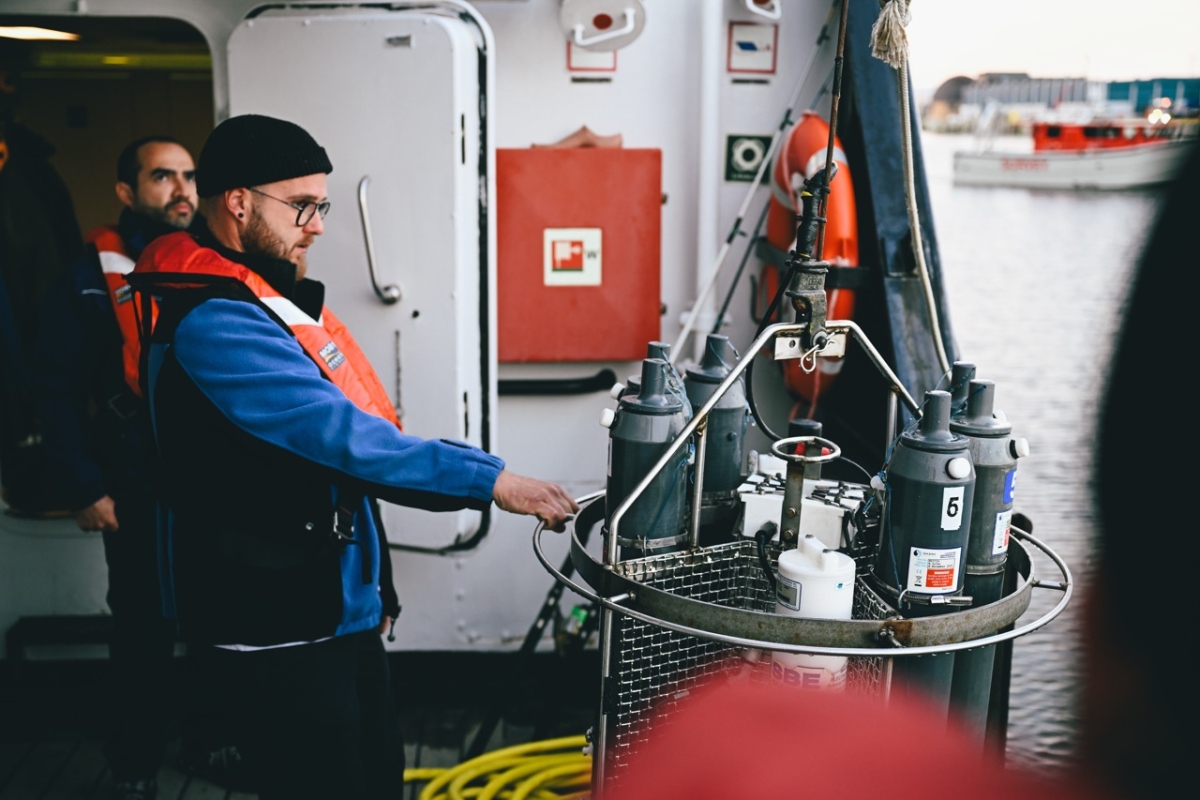
An article by Steinhoff et al (2025) reports the largest systematic intercomparison of ocean surface partial pressure of carbon dioxide (pCO₂) measurement instruments undertaken to date. The work was coordinated by the ICOS Ocean Thematic Centre to assess how different types of instrumentation compare under controlled conditions.
The study provides a comprehensive comparison of the different measurement methods used by ICOS Ocean stations and other networks. Knowing the uncertainty of each method is crucial for estimating the global ocean CO₂ sink.
Read the full article: Steinhoff, T., Gkritzalis, T., Jones, S., Macovei, V. A., Neill, C., Schuster, U., ... & Wanninkhof, R. (2025). The ICOS OTC p CO2 instrument intercomparison. Limnology and Oceanography: Methods. https://doi.org/10.1002/lom3.10727
Read a more in-depth story of the article here.
Bridging the gaps of the station network
The outcomes of a recent collaboration between the ICOS Atmosphere and Ecosystem Thematic Centres have now been summarised in an article by Coimbre et al. (2024).
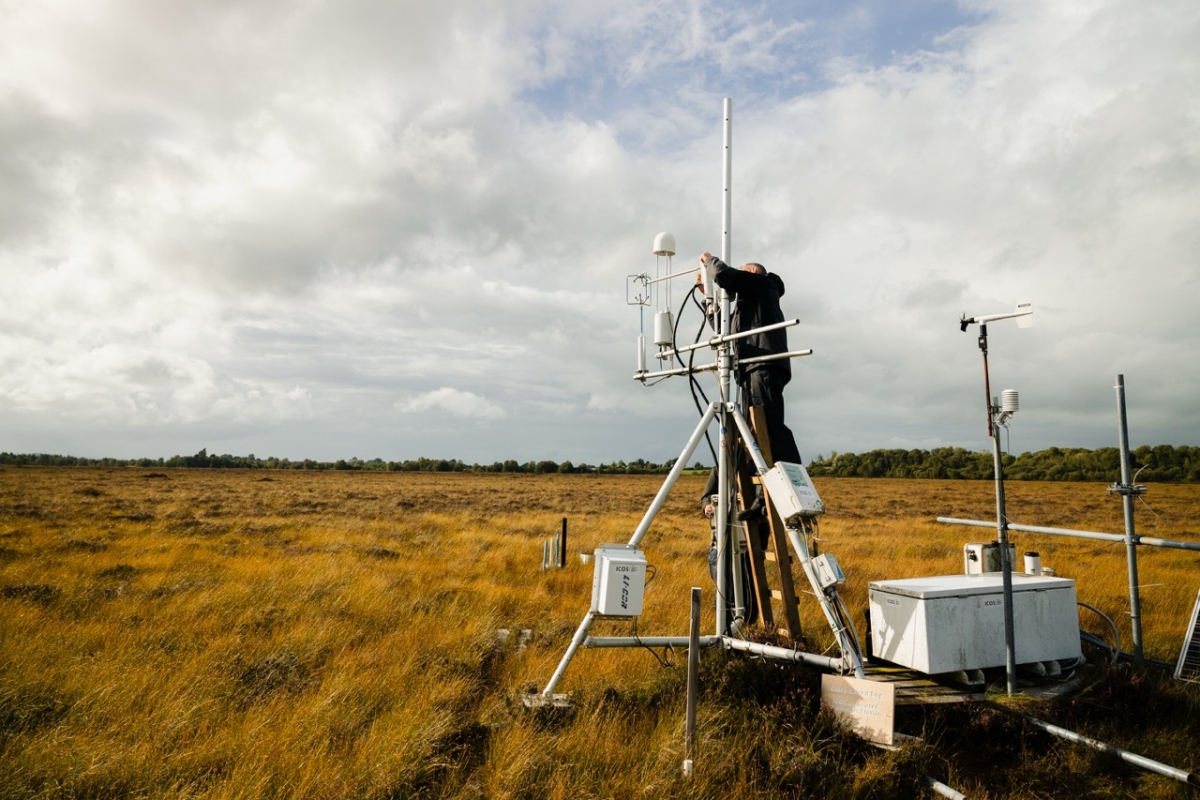
This research evaluates the potential of using atmospheric tall towers in direct flux measurements, bridging the gap between the ICOS atmospheric and ecosystem monitoring networks. It explores synergies between these networks by utilising slow-response analysers on tall atmospheric towers for ecosystem studies using the eddy covariance method.
The study demonstrates the potential of expanding flux measurements through a relatively inexpensive instrumentation addition, offering valuable insights for both ecosystem and atmospheric measurements.
Read the full article: Herig Coimbra, P. H., Loubet, B., Laurent, O., Bignotti, L., Lozano, M., & Ramonet, M. (2024). Eddy covariance with slow-response greenhouse gas analysers on tall towers: bridging atmospheric and ecosystem greenhouse gas networks. Atmospheric Measurement Techniques, 17(22), 6625-6645. https://doi.org/10.5194/amt-17-6625-2024
An Italian perspective to network expansion was explored in a study by Villalobos et al. (2025) that investigated the requirements for estimating CO2 emissions at the country scale using observational data from the ICOS atmosphere network, taking Italy as a case study. They explore the potential expansion of Italy’s current atmospheric ICOS network, identifying, in particular, two specific candidate stations in southern Italy. Their research highlights the importance of strategic station selection to optimise network performance and improve regional carbon flux assessments.
Read the full article: Villalobos, Y., Gómez-Ortiz, C., Scholze, M., Monteil, G., Karstens, U., Fiore, A., Brunner, D., Thanwerdas, J. and Cristofanelli, P., 2025. Towards improving top–down national CO2 estimation in Europe: potential from expanding the ICOS atmospheric network in Italy. Environmental Research Letters, 20(5), p.054002. 10.1088/1748-9326/adc41e
Thank you for using ICOS data in 2025!
The high-quality greenhouse gas data from ICOS can be accessed by anyone, free of charge, and from anywhere in the world. In return, the ICOS requires all its data users to cite and acknowledge the use of its data. Please visit this page for instructions on how to cite ICOS data.