ICOS stations observe climate extremes while operating through them
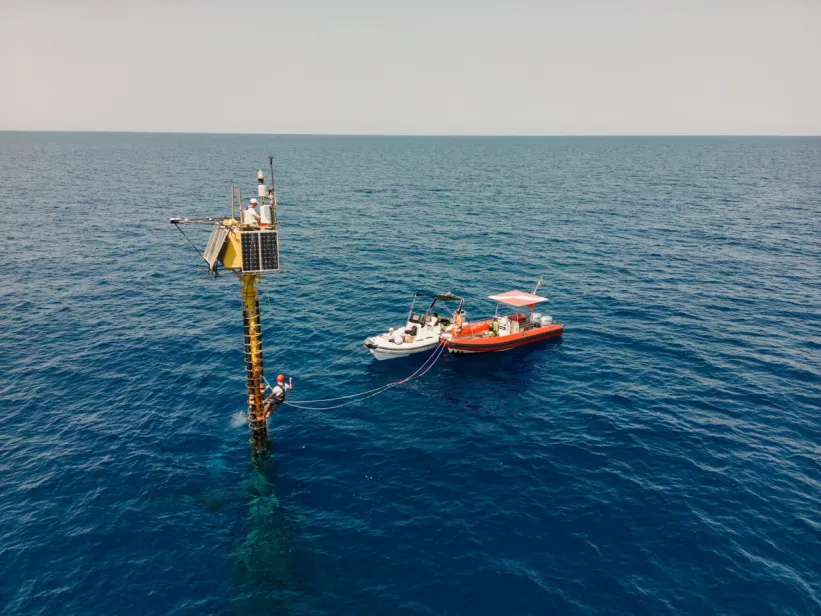
In summer 2026, the hottest summer on record for Western Europe, ICOS stations measured the same extreme conditions they had to operate through. At Lampedusa in the Mediterranean, ocean temperatures approached 32°C while heat, humidity and sea salt placed additional strain on instruments. In Germany, the Hartheim ICOS Ecosystem station recorded its warmest summer in nearly 50 years. ICOS stations offer a rare perspective on climate extremes: they are both experiencing them and measuring how ecosystems and the carbon cycle respond.
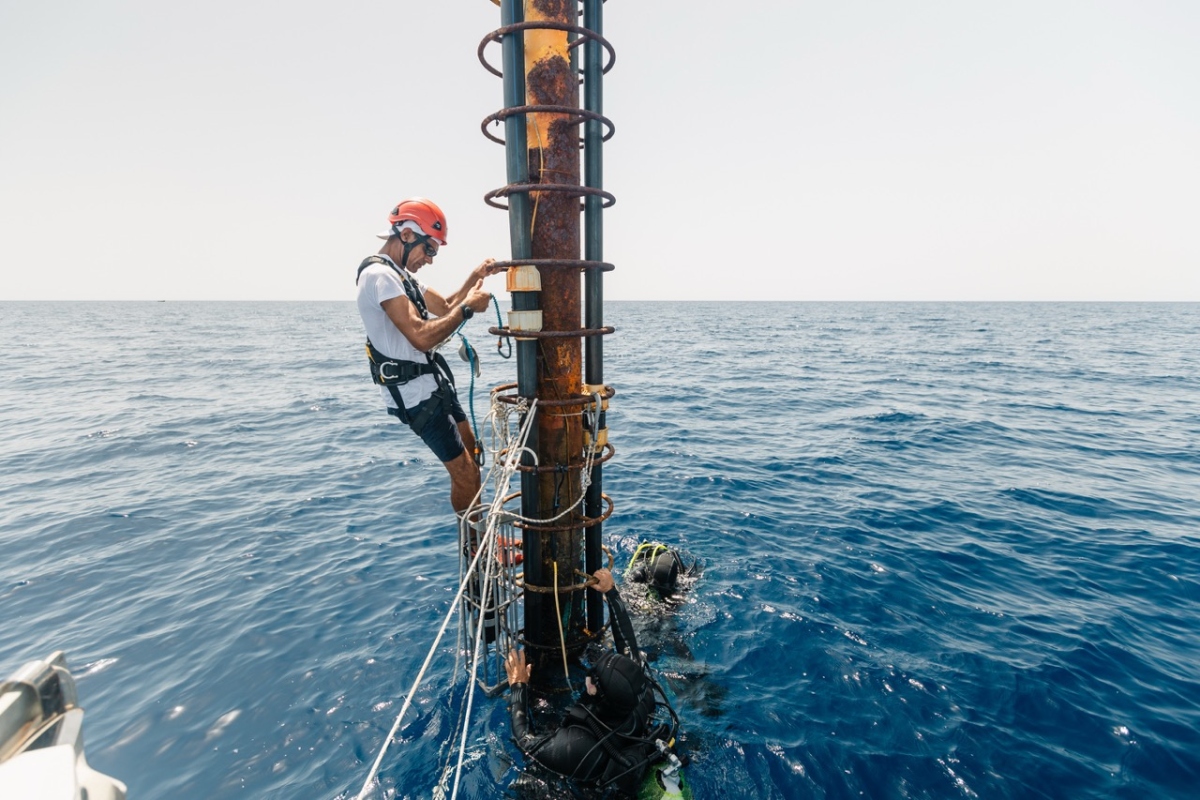
ICOS stations operate in extreme conditions at it is – on top of mountains, on remote islands, in the middle of wetlands or by the sea. Stations and their staff are accustomed to handle the usual challenges, whether that’s protecting stations against wildlife or insects, or shielding sensitive instruments against snow, storms or seawater. The regular maintenance work is not often seen by data users, but it’s part of what keeps the data flowing from the stations onto the data portal.
The impacts of climate change, however, puts some of these routines to the test. At the same time, continuity of high-quality greenhouse gas data is a high priority for everyone in the ICOS network. Even though stations run around the clock mostly autonomously, their instrumentation is regularly maintained and data reviewed by the stations’ Principal Investigators (PI) and technicians.
“Instruments at our station were experiencing, in some cases, very difficult conditions. This summer, we received some error messages problems with the eddy covariance measurements, which were probably due to the high temperatures. So there was significant stress on all the instruments”, says Dr Alcide Giorgio di Sarra, a co-Principal Investigator of Lampedusa Ocean station and Research Director at ENEA. The station, part of ICOS Italy, get its name from the Lampedusa island where it’s located.
“Lampedusa is also already a difficult environment because of sea salt and humidity”, he continues. “Instruments are subjected to a lot of corrosion. So it's something that we try to take into account and take care of.”
The ICOS Atmosphere Thematic Centre (ATC), hosted by Laboratoire des Sciences du Climat et de l’Environnement (LSCE), ensures data quality through standardised processing, automated data flows and quality-control tools. This summer, a temporary server failure, caused by overheating at the LSCE laboratory in Paris, temporarily stopped data from flowing from the stations into the ATC. The data remained, however, securely stored at the stations and could be sent onward to the ATC once the service was restored.
“It was a temporary lack of data, because as soon as the gate was open again, the data were pushed in. They were processed immediately, automatically, and then it could be accessed again,” says Lynn Hazan, who is responsible for the data unit at the ATC. “The problem was fixed within a week, and the IT team is working on the cooling system to have a solution for next summer.”
Warmest year on record produced high stress for trees
The station PIs at both Hartheim and Lampedusa are uniquely placed to observe changes in the environment.
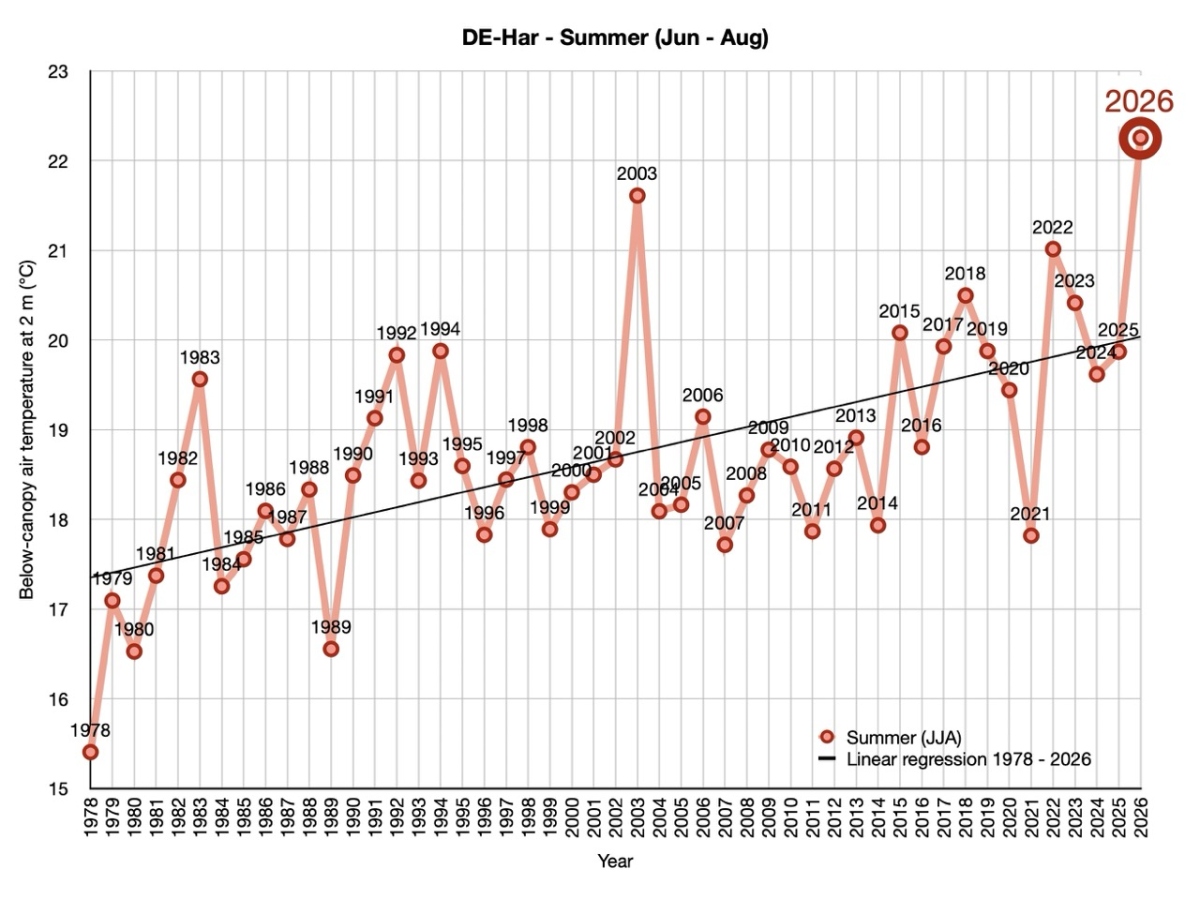
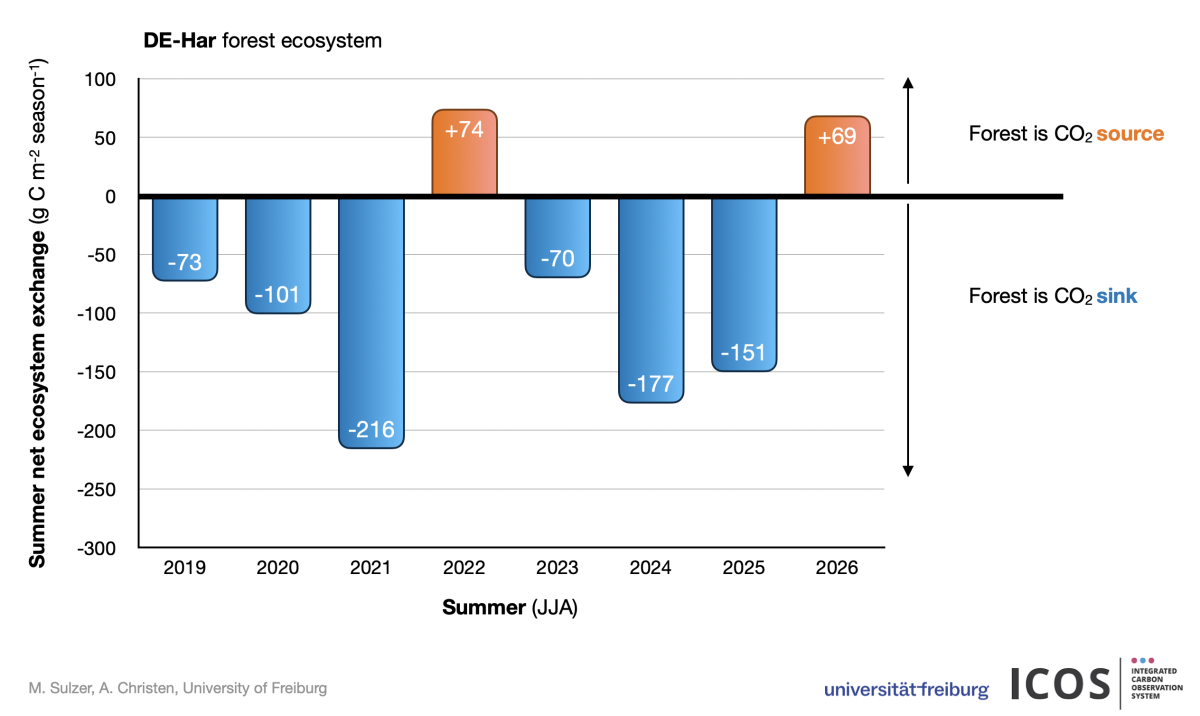
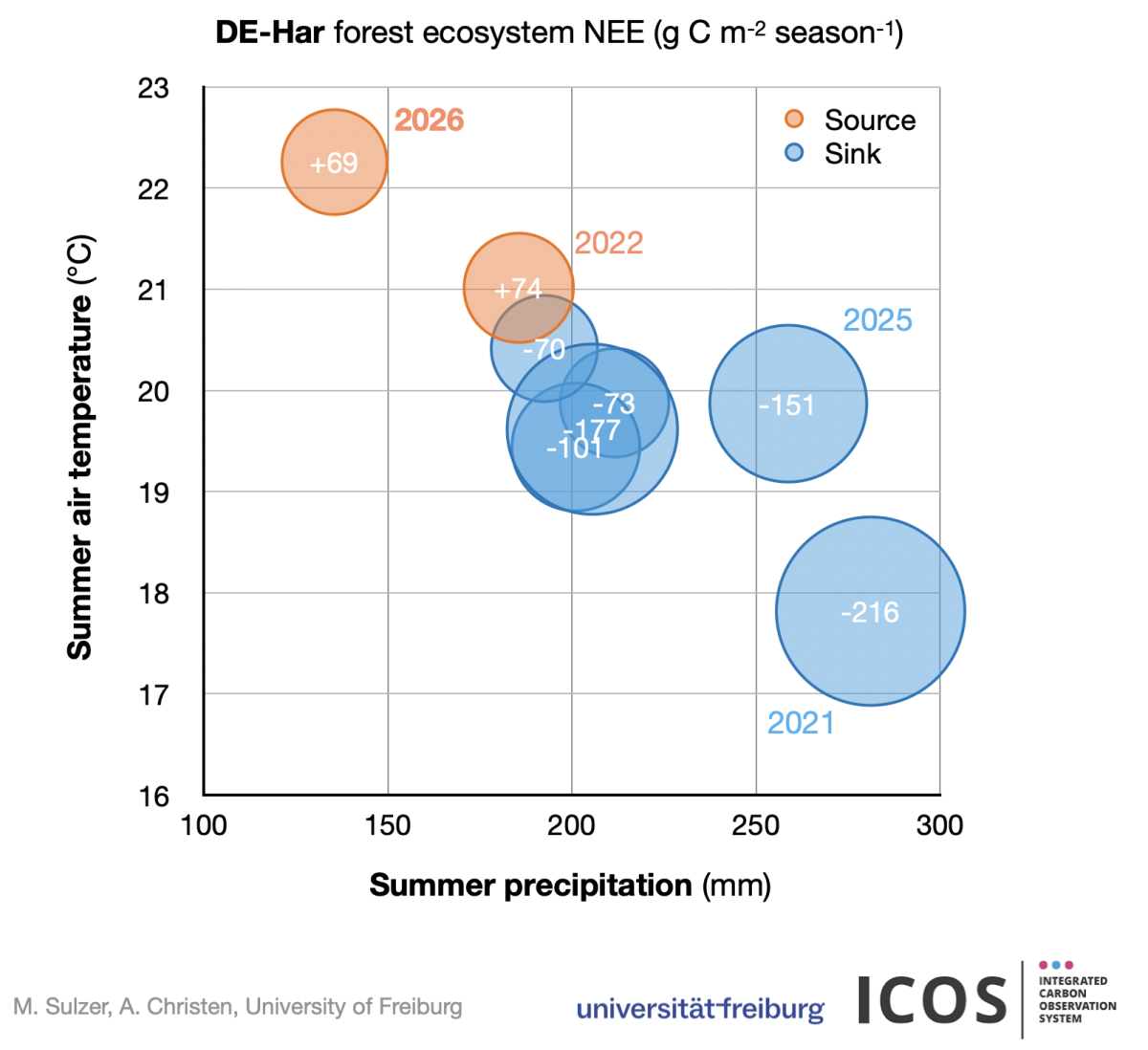
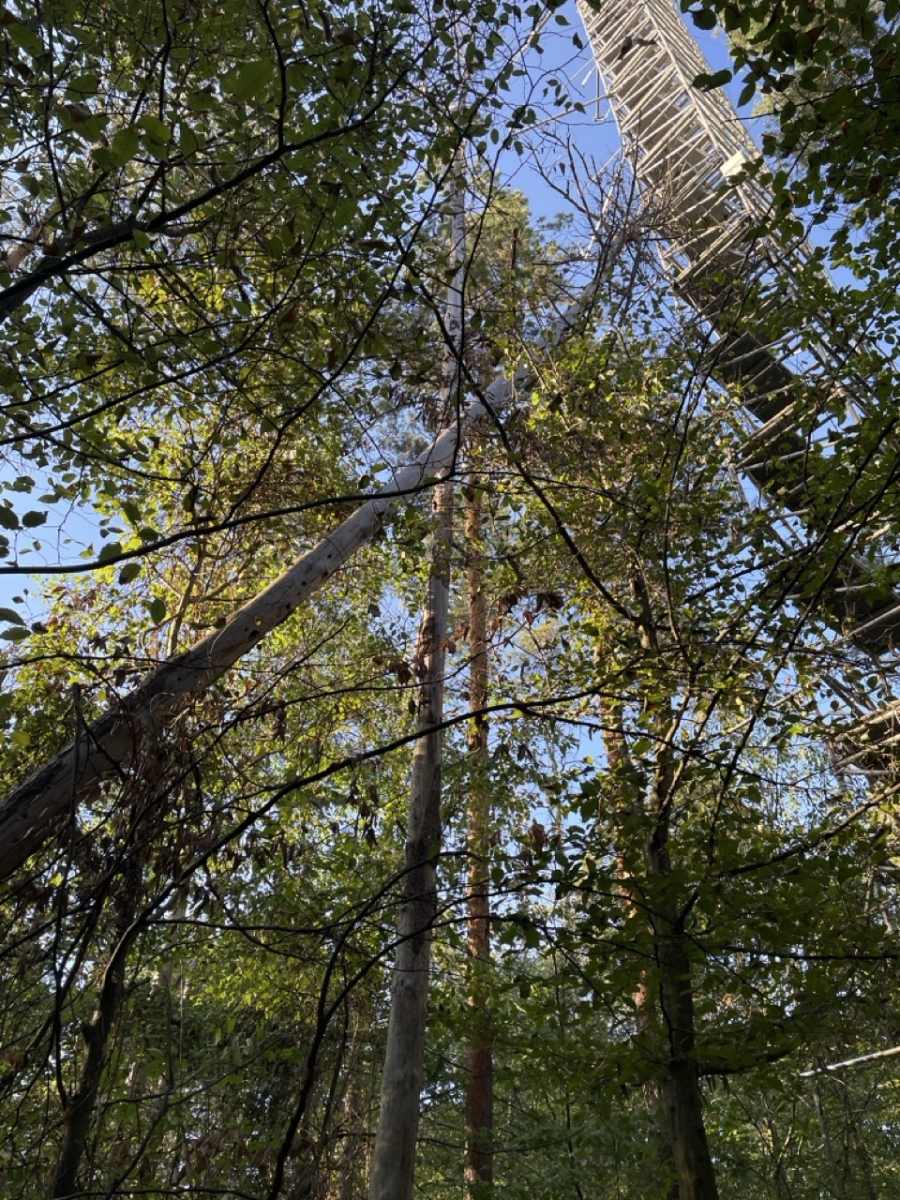
The Hartheim ICOS Associated Ecosystem station in Germany recorded its warmest summer in nearly 50 years, below canopy air temperatures of 40.6°C and a 35% precipitation deficit. Hot and dry conditions put the spruce forest at Hartheim under incredible stress, explains Dr Andreas Christen, Principal Investigator of Hartheim and Professor of Environmental Meteorology at the University of Freiburg.
“The combination of hot and dry conditions enforce one another. The vapour pressure deficit, which tells us how much water the atmosphere can take up, is generally much higher at higher temperatures. That means the hot weather essentially sucks the water out of the ecosystem, and it dries it out much more rapidly”, he explains.
“That's problematic for the trees, because if they come into a water stress situation, they control with their stomata the rate of water loss through transpiration. But eventually they can also undergo hydraulic failure. That means that the water is no longer transported up to the leaves, and we can have damage of entire branches, or in extreme cases, entire trees.”
When trees are under stress, their ability to absorb and store carbon weakens. ICOS measurements at Hartheim show the forest becoming a source of carbon in summer 2026, which is unusual for summer when forests are usually carbon sinks, absorbing carbon from the atmosphere.
What does this mean for climate change mitigation?
“This clearly tells us that forests locally can also reach tipping points. Climate change will reach extremes that damage the function of carbon sequestration. Whether this can be reversed with good management and replanting or natural regeneration is a big question”, Christen says.
Forest management has, in fact, been the topic of a recent research article on the Hartheim ecosystem site, where scientists from the University of Freiburg studied the carbon balance across two sites that were managed differently following widespread drought damage. One site was clear-cut and one was managed non-invasively. The researchers found that both sites continued to be year-round sources of carbon dioxide after droughts. That means that they no longer served as sinks, but they actually added emissions to the atmosphere.
“However, the degree of CO₂ release was different. The clear-cut had about four times as much carbon released into the atmosphere as the disturbed but non-invasively managed forest. We believe the disturbed forest, even with many trees dead and some of the canopy very damaged, acts as a shelter, and it buffers the microclimate for regrowing trees in the understorey of the forest. This microclimatic buffering seems to be quite important”, Christen explains.
“It is something we’ve never experienced before”
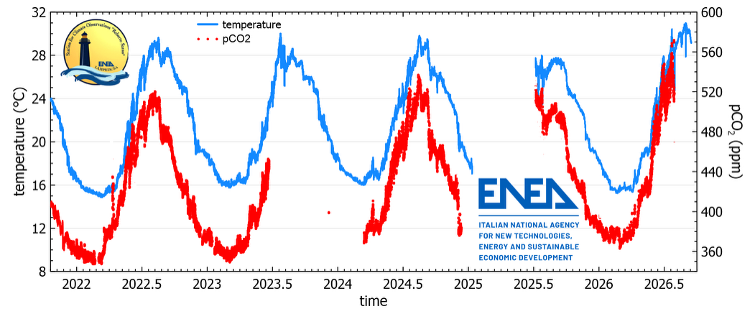
Lampedusa saw unprecedented ocean temperatures approaching 32°C and usually high summer CO₂ concentrations. The marine heatwave was measured not only at the sea surface but exceptionally deep.
“We find temperatures above 30°C even at five metres and 18 metres. It’s also a huge amount of heat which is stored in the ocean, and it will sometime be given back to the atmosphere, with some effects that might not be easy to cope with”, says Alcide Giorgio di Sarra from the Lampedusa station. “It is something we’ve never experienced before.”
The partial pressure of carbon dioxide (pCO₂) in the surface waters, measured at ICOS Ocean station at Lampedusa, were exceptionally high in July-August, which can mean bad news for atmospheric CO₂. Extremely warm seawater and high surface-water pCO₂ can reduce the ocean’s ability to take up carbon and, when seawater pCO₂ exceeds atmospheric levels, favour the release of carbon back to the atmosphere.
“The pCO₂ in the ocean was very, very high. It reached the highest value that we measured. Possibly, there might also be a significant flux from the ocean to the atmosphere, which might be contributing to the increase in CO₂”, di Sarra says.
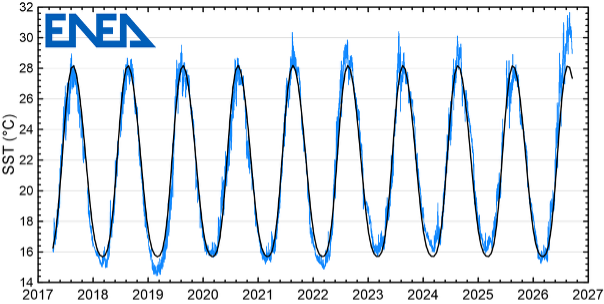
Previous research, using ICOS data from Lampedusa, and last presented at ICOS Science Conference 2026, has shown that marine heatwaves can weaken the Mediterranean Sea’s uptake of carbon dioxide. During a winter heatwave in 2022–2023, CO₂ absorption by the ocean was about 30% lower than in the previous year.
“When the ocean is warmer, it is less capable of absorbing carbon from the atmosphere,” di Sarra says. “But this is not only due directly to the temperature effect. In the Mediterranean it is essentially connected to how the heat waves are working.”
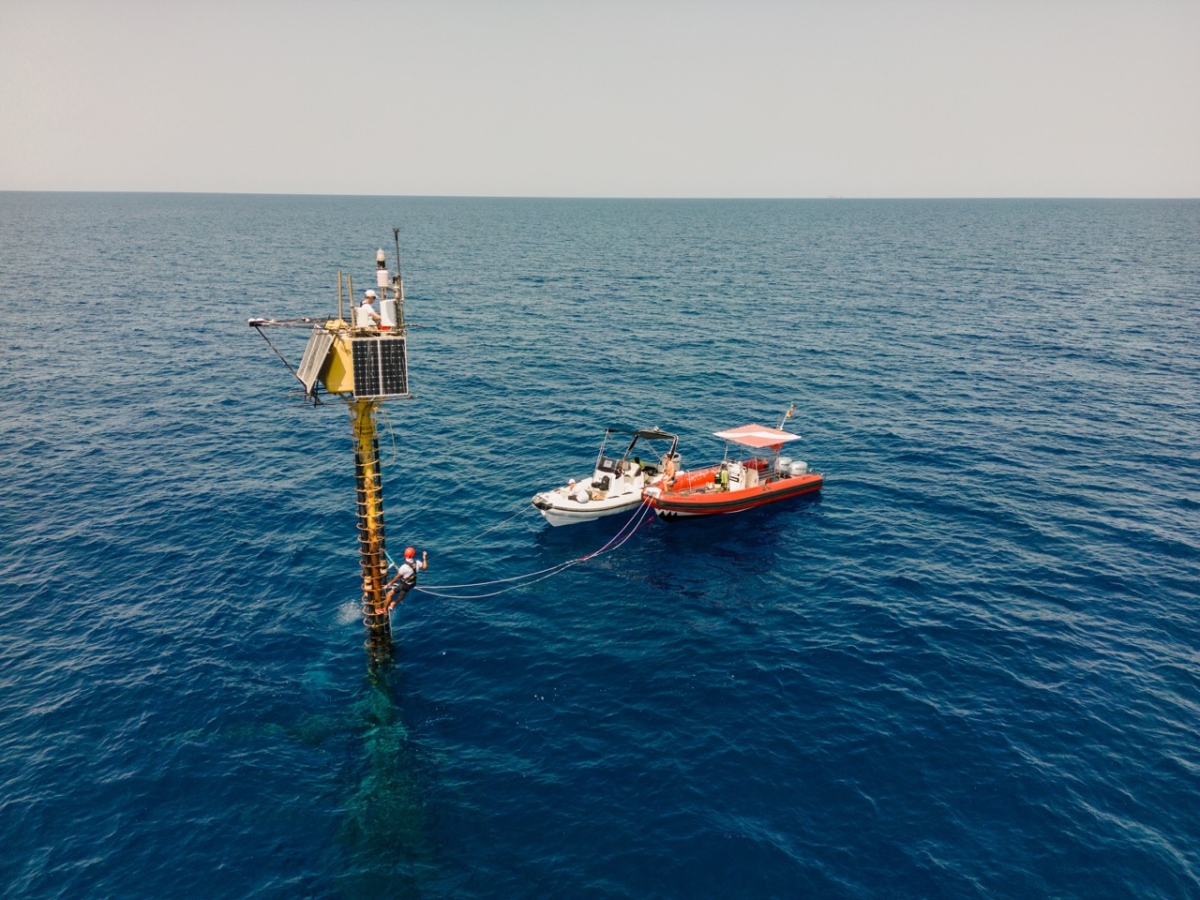
Mediterranean heatwaves are often associated with persistent high-pressure systems and weak winds, which reduce the exchange of CO₂ between the ocean and atmosphere.
“If you have no wind, the exchange with the ocean reduces, and if there is strong wind, the transfer is much, much stronger,” he explains.
At the same time, hot and dry conditions can reduce the ability of vegetation to absorb CO₂, while wildfires add further emissions. During extreme summers, these processes can act together and weaken natural carbon sinks. The Lampedusa is an integrated observatory, which means it includes stations from all three ICOS domains – Atmosphere, Ecosystem and Ocean. This offers researchers around the world the opportunity to observe different aspects of the carbon cycle from the same site.
“Having three observatories means we can look at different contributions in the global picture”, di Sarra says.
ICOS data tracks changes in the carbon cycle as they happen
The experiences at Hartheim and Lampedusa stations show how the warming climate puts the foundations of the carbon cycle – forests and the ocean – under pressure. The unprecedented conditions can change the mechanisms of those carbon sinks, causing, for example, forests to become carbon sources in the middle of the growing season. ICOS data helps to track these changes across Europe as they happen.
“We need long-term, standardised measurements so we can understand extreme events in relation to more typical conditions”, Hartheim station PI Andreas Christen says. “At a single site, I can be lucky to see an individual effect, like the hot, dry summer here and how this affects the forest. But the question will be, how does this scale up to all of Europe, and how does this scale up even globally? Because that's what matters from a carbon cycle perspective.”
The ICOS scientific community, consisting of more than 500 scientists all across Europe, is also working to understand these changes together.
“We had an exchange of emails and graphs with colleagues at the ICOS Atmosphere Thematic Centre. It seems that all the Mediterranean sites have a similar pattern, or at least some of the Mediterranean sites show this reduction of the summer minimum of CO₂. So this is something that we are trying to understand better”, Lampedusa PI, Alcide Giorgio di Sarra says.
The main thing both scientists want to point out is that changes are rapid, and action is needed now.
“Climate change is proceeding much more rapidly than what's often said. We often talk about having reached 1.5 degree warming , but that's globally, and that includes oceans. Over land and in high latitudes, the rate of warming is faster and for many ICOS sites it is 2 or even 3°C over the last decades”, Andreas Christen points out.
“And it's not only about temperature. Water availability plays an important role. A warmer world means we have larger vapour pressure deficits, so for example, ecosystems can dry out more rapidly”, he continues.
“These extreme events, like the heat waves and the combined effects, are telling us that time is running out. We should really take this message seriously and take stronger action to reduce emissions”, Alcide Giorgio di Sarra says.
Read more
- Explore data from ICOS Associated Ecosystem station Hartheim: https://meta.icos-cp.eu/resources/stations/ES_DE-Har
- Explore data from ICOS Atmosphere, Ecosystem and Ocean station Lampedusa: https://meta.icos-cp.eu/resources/stations/AS_LMP
- Read the article Sulzer, M., Haberstroh, S., Werner, C., & Christen, A. (2026). Carbon dioxide fluxes of two differently managed sites in a former Scots pine plantation in response to widespread drought mortality. Agricultural and Forest Meteorology, 389, 111398. https://doi.org/10.1016/j.agrformet.2026.111398
Read the article Pecci, M., D. Sferlazzo, F. Anello, S. Becagli, S. Colella, L. De Silvestri, T. Di Iorio, A. Iaccarino, D. Meloni, F. Monteleone, S. Piacentino, E. Principato, and A. di Sarra (2026), First derivations of air-sea CO2 fluxes in the Central Mediterranean and possible impact of the 2022-23 marine heatwave, Journal of Geophysical Research: Oceans, 131, e2025JC023007. https://doi.org/10.1029/2025JC023007