Projects
ICOS coordinates and participates in European and global projects that advance current and future science, facilitate technological developments and inform climate policy.
ICOS-coordinated projects
Currently, ICOS ERIC is coordinating two projects: GEORGE and NUBICOS.
ICOS Cities and KADI finished at the end of 2025. You can find the results of these and other projects below.
GEORGE (2023-2027)
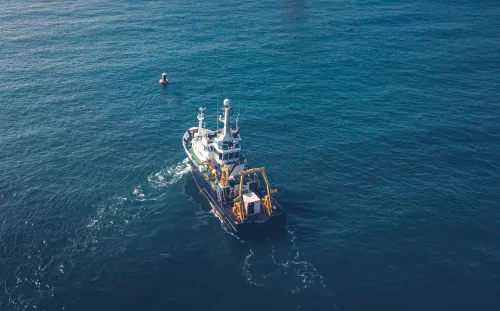
GEORGE is a Horizon Europe-funded project that develops novel technologies to improve ocean observations. The technologies developed will represent the next level in systematic long-term autonomous ocean observations.

KADI (2022-2025)
Knowledge and climate services from an African observation and Data research Infrastructure (KADI) aims to provide concepts for developing the best available science and science-based services in Africa.
NUBICOS (2024-2027)
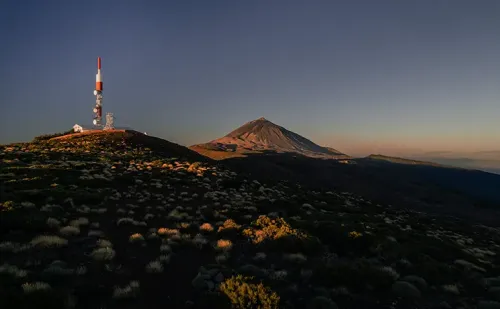
NUBICOS is improving ICOS observational data and products for better science and actionable policy. Through improved staff training and engagement, NUBICOS is consolidating the existing and future ICOS community.
ICOS Cities (2021-2025)
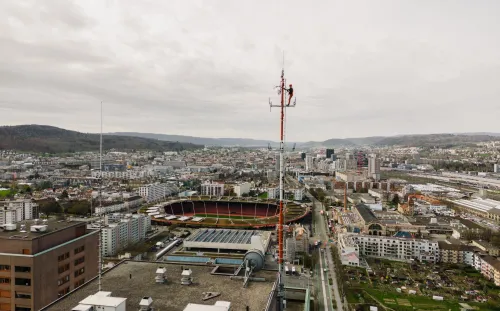
ICOS Cities brings together European citizens, policy makers and top scientists in co-designing pioneer greenhouse gas measurement methodologies and services for cities to support climate action.
ICOS is a partner in:
AMRIT(2024-2028)
AMRIT is a Horizon Europe-funded project aimed at strengthening marine research infrastructures across Europe. It integrates key services to support the European Ocean Observing System (EOOS) and fosters collaboration among marine researchers, platform operators, and policymakers.

ENVRI-Hub NEXT (2024-2027)
ENVRI-Hub NEXT develops a user-friendly platform for seamless access to data from environmental Research Infrastructures, fostering interdisciplinary research and driving breakthroughs in environmental science.

ERIC Forum 2 (2023-2027)
This project aims to structure the cooperation between ERICs, support the implementation of the ERIC Regulation and ERICs services, and consolidate the integration of the ERICs in the European Research Area by deepening the ERIC Forum’s contribution to research policies.
Past projects
ATMO-ACCESS (2021-2025)
ATMO-ACCESS provided physical, virtual and remote access services to more than 50 atmospheric facilities’ data and instruments worldwide through periodic calls.
ENVRI-FAIR (2019-2022)
ENVRI-FAIR built a set of FAIR (Findable, Accessible, Interoperable, Reusable) data services for all participating ENVRI Research Infrastructures.
EOSC Future (2021-2024)
EOSC Future was an initiative initiative designed to implement, integrate, and consolidate the European Open Science Cloud (EOSC).
ERIC Forum 1 (2019-2022)
ERIC Forum Implementation Project strengthened the coordination and enhanced collaborations between the participating ERICs.
EuroGO-SHIP (2022-2025)
EuroGO-SHIP sought to enable the European community conducting hydrographic observations at sea to provide higher quality and more sustainable data flows to a broad range of end users.
traceRadon (2020-2023)
traceRadon aimed to provide the necessary measurement infrastructure and use the data that it generates to apply the Radon Tracer Method (RTM).