How marine Research Infrastructures drive innovation: GEORGE project
Marine Research Infrastructures have long been the testbeds for innovation. The Horizon Europe project GEORGE brings together three marine Research Infrastructures - Euro-Argo, EMSO and ICOS, as well as some of Europe's leading marine scientific institutions and technology developers to design, test and validate new autonomous observing technologies for ocean carbon measurements under real ocean conditions. Two milestones - a compact new sensor and a major multi-platform demonstration mission - show how this collaboration is turning early-stage technology into field-proven tools for understanding ocean carbon cycling.
A compact new instrument: the CaPASOS system
One of the technologies advanced through GEORGE is CaPASOS, a compact instrument for measuring surface ocean pCO₂, developed by the University of Exeter. The system is designed to be deployed on uncrewed surface vehicles (USVs), and that development, which began under the project that gave the instrument its name, is now over five years in.
What sets CaPASOS apart is its very small footprint and low power consumption, allowing it to be installed in tight spaces across a wide range of platforms.
GEORGE gave the instrument its first real ocean test in 2025: CaPASOS was sent on its maiden voyage aboard a Sailbuoy platform, travelling over 1,000 km offshore from the coast of Ireland to the Porcupine Abyssal Plain (PAP) site.
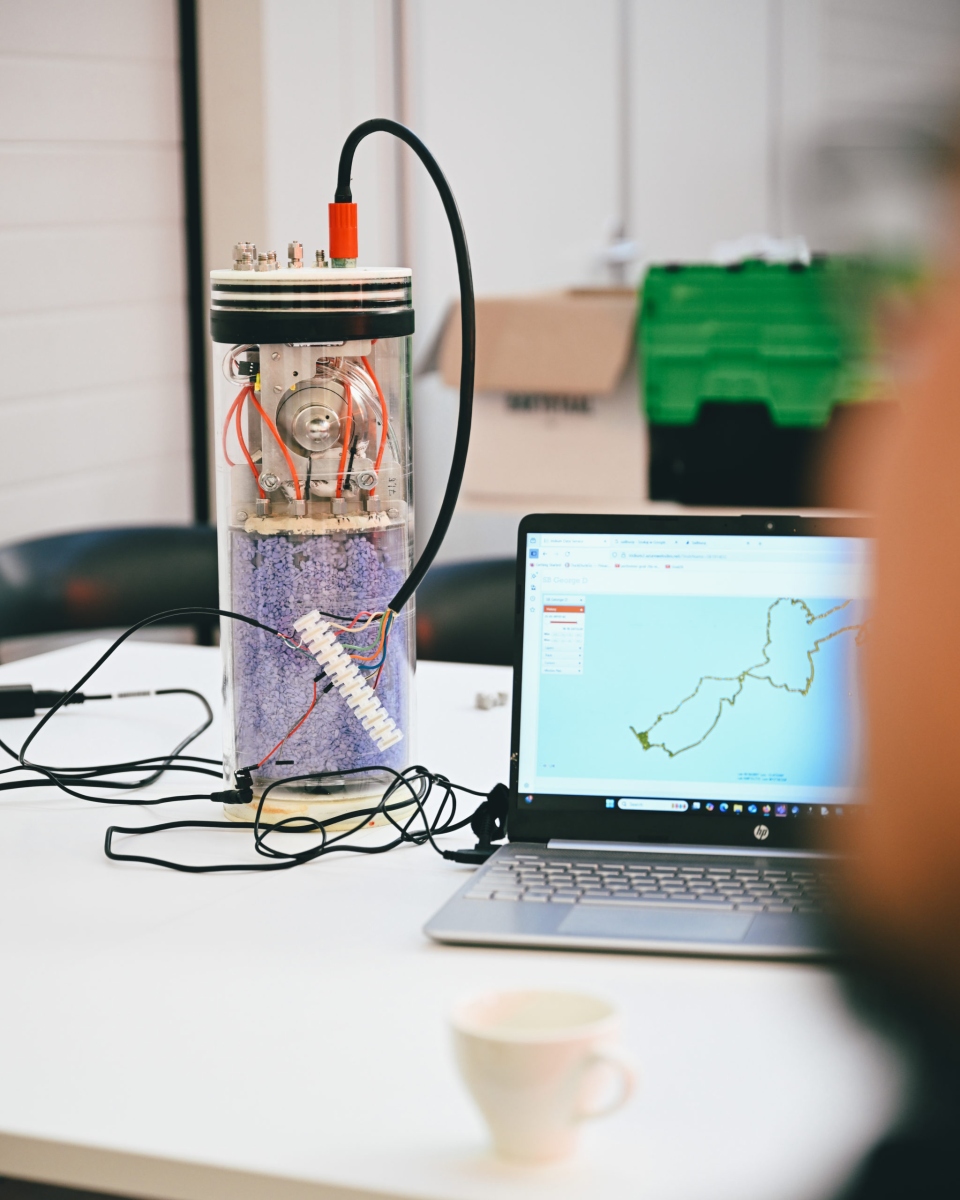
One of the team's other goals for the CaPASOS system is a long-term deployment in the Southern Ocean under harsh winter conditions, where data is currently scarce. This is planned to be executed in 2026 and 2027 as part of the TRICUSO project. They are also exploring a smaller test-bed educational version of the instrument dubbed "CaPASOS-lite". The goal is to demonstrate how a seaworthy oceanographic instrument works and widen community involvement in pCO₂ measurements.
A multi-platform deep-sea demonstration at PAP
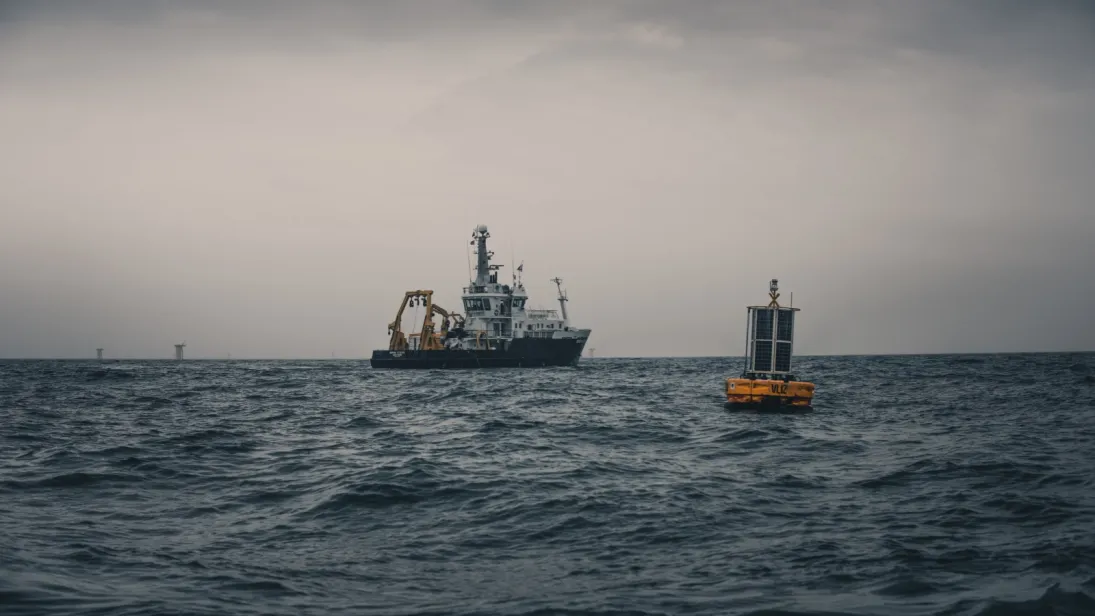
CaPASOS was just one part of a much larger demonstration. In June 2025, GEORGE launched a year-long deployment at the Porcupine Abyssal Plain (PAP) observatory, roughly 500 km west off the coast of Ireland. Maintained by National Oceanography Centre (NOC) and part of the ICOS ocean observing network, the PAP site was chosen for its four decades of monitoring history and its harsh, storm-exposed conditions providing a demanding test bed for new autonomous technology.
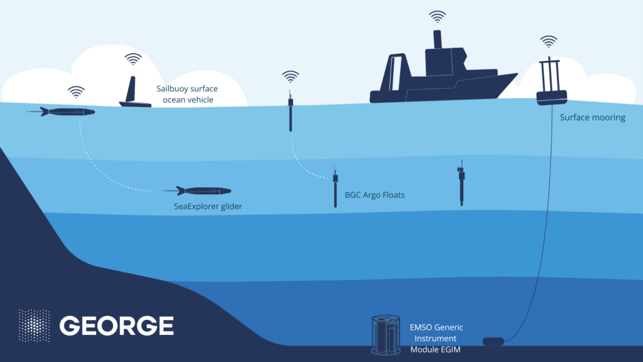
The deployment brought together autonomous platforms including the EMSO Generic Instrument Module (EGIM), BGC-Argo floats, the SeaExplorer glider, the Sailbuoy, and a surface mooring. Together, these platforms carried new sensors capable of autonomously measuring key ocean carbonate parameters - pH, pCO₂, dissolved inorganic carbon and total alkalinity.
Measuring across multiple platforms allows scientists to understand carbon cycling across several dimensions - horizontally, vertically, and over time - while also providing valuable redundancy if one platform experiences an issue.
Bringing it home: the EGIM recovery
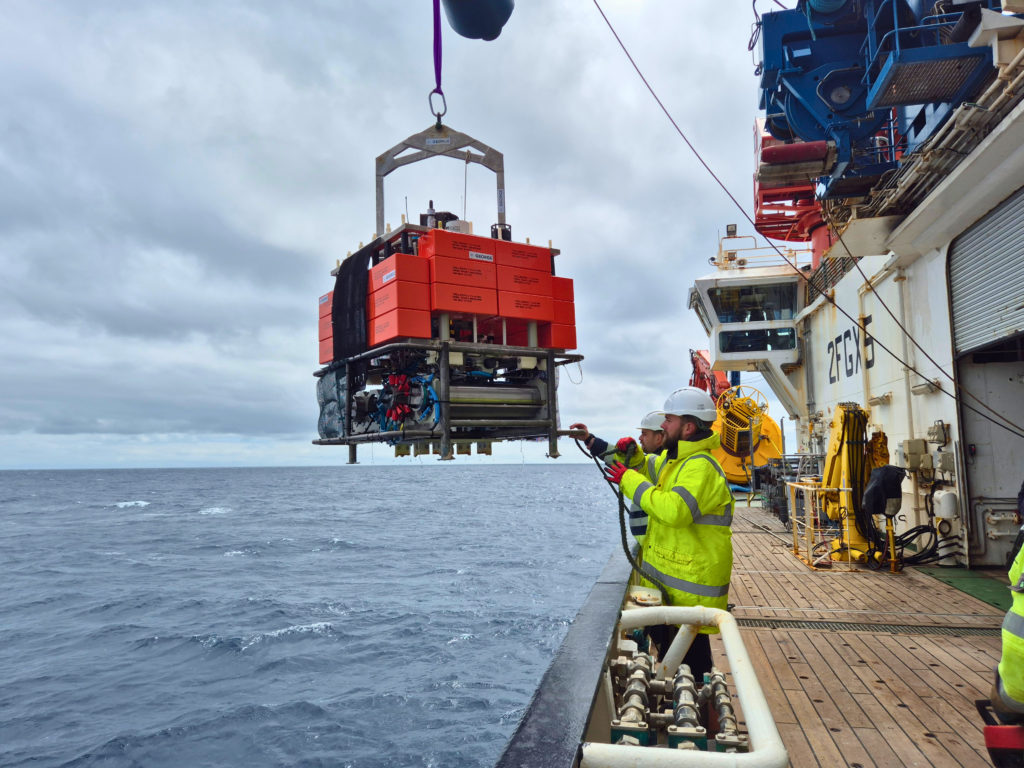
The mission reached its conclusion in May 2026, when the EGIM deep-sea platform, fitted with the new sensors developed in GEORGE, was recovered from nearly 5 km below the surface at the PAP observatory, during GEORGE partner National Oceanography Centre’s annual research expedition to the site.
The recovery of the deep-sea instrument was a series of tense milestones: triggering the ascent by acoustic signal, waiting for an acknowledgment from the seabed, tracking the roughly five-hour rise to the surface, and finally connecting to the data logger to check whether the data had been successfully recorded.
The next step for the team is to assess and perform quality control on the data, and work out where to deposit the data long-term. This work was progressed in September 2026 in a workshop, organised jointly by ICOS and NORCE, in Helsinki, Finland.
This work brings the ocean-observing community closer to simultaneous measurements from the sea surface to the seabed and supports collaboration between EMSO, Euro-Argo and ICOS and sensor developers as they begin working with joint data.
Why this matters for innovation
Together, these developments illustrate how environmental research infrastructures act as engines of innovation: CaPASOS shows how a compact, low-power sensor can move from years of development to real offshore testing, while the PAP deployment shows how multiple RIs can develop and test new technologies on various platforms to observe the ocean carbon system from surface to seabed.
Learn more in the Horizon Magazine: https://projects.research-and-innovation.ec.europa.eu/en/horizon-magazine/new-ocean-sensors-could-transform-how-scientists-track-marine-carbon-cycle
This article is part of the ENVRINNOV project Innovation Success Stories showcasing how environmental research infrastructures support innovation.