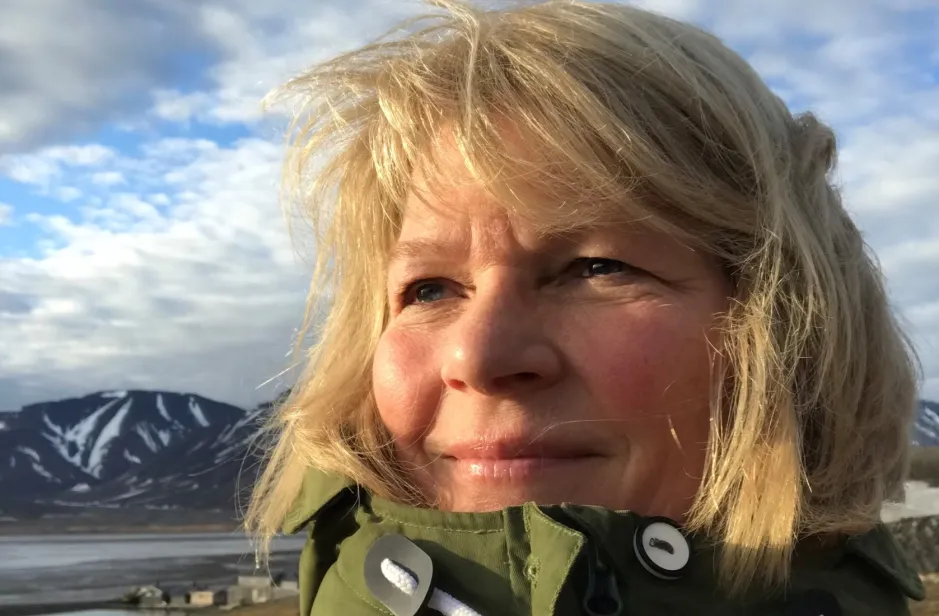
International Women’s Day interview with Ingunn Skjelvan: “We were the very first ones in Norway doing such measurements”
On International Women’s Day, we like to highlight women scientists in the ICOS community whose work underpins our understanding of the carbon cycle. Dr Ingunn Skjelvan is a chemical oceanographer at the ICOS Ocean Thematic Centre in NORCE, and has been closely involved in building and maintaining the quality framework for ICOS ocean observations since 2016.
Ingunn Skjelvan’s career in ocean carbon research began in the early 1990s, when she worked on developing a new method for extracting CO₂ from seawater samples, at a time when such measurements were only just being established in Norway. Since then, she has contributed to the development of long-term ocean carbon time series, including the inorganic carbon record from Station M in the Norwegian Sea.
In this interview, she reflects on the path that led her into oceanography, the scientific and personal milestones along the way, and why inclusion, openness and strong professional networks are important to supporting women in the field.
What's your role in ICOS? What does that include?
In ICOS, I wear two hats: Firstly, I’m responsible for labelling process for the ICOS Ocean stations in the ICOS Ocean Thematic Centre. In short, this means helping the stations deliver data of highest possible quality. We typically first start working with the stations when a they are being set up for measurements. We help them through the labelling process by checking the quality of data and metadata, and eventually recommend the Head Office to accept the station as an ICOS station.
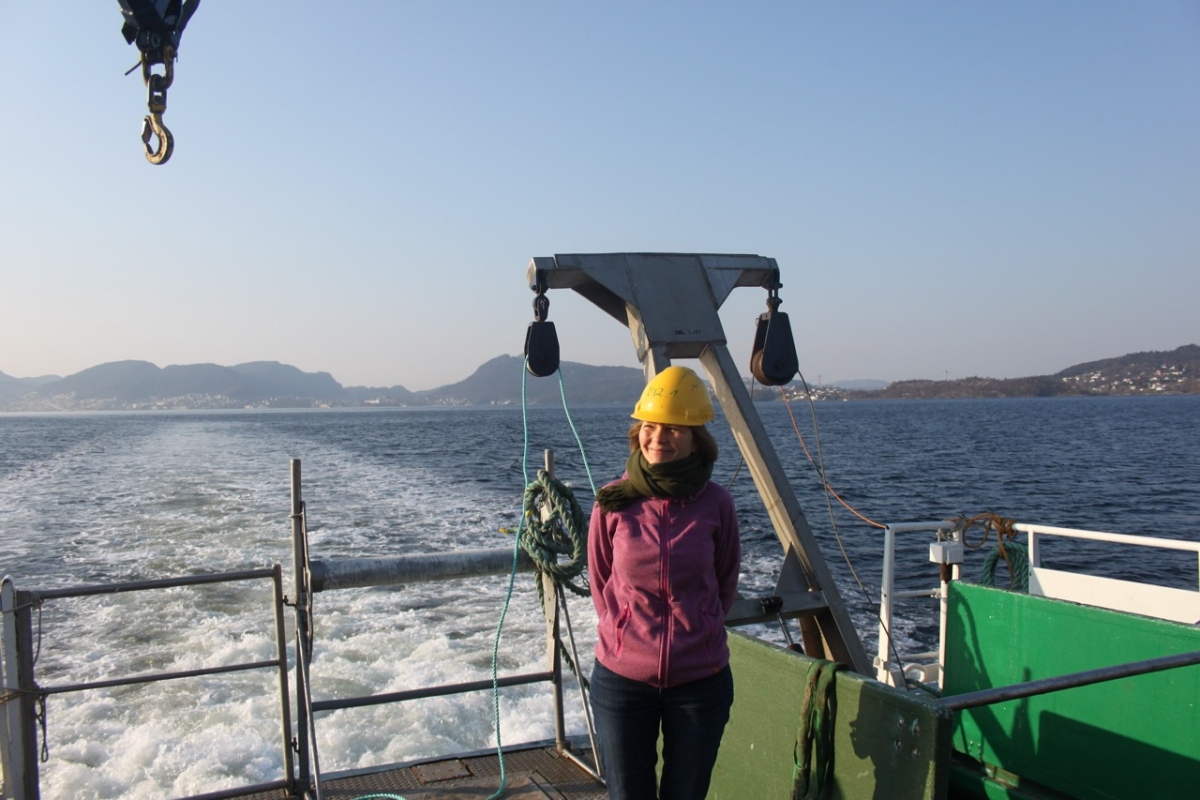
Secondly, I’m Principal Investigator of a Norwegian ICOS station: NO-SOOP G. O. Sars, which measures partial pressure of CO₂ (pCO₂) in surface water and atmosphere in the Nordic Seas including the North Sea and the Barents Sea.
How did you get started in this field?
It was actually a coincidence! I was studying physics in Trondheim in Norway and stumbled across a lecture series about Global transport processes in nature, carbon cycle, and climate changes, given by the enthusiastic professor Reidar Nydal. He was in charge of the C-14 dating laboratory in Trondheim and studied the C-14 decay in atmosphere and surface ocean after the nuclear tests in the 1950s and 60s. I found Nydal’s lectures and the topic deeply fascinating, so I did my Master’s on a new method of extracting CO₂ from seawater samples. As far as I know, we were the very first ones in Norway doing such measurements in the early 90s. I have stayed in this field of ocean observations since then, just moved between universities and cities.
Who were your role models?
I have not had any particular role model, but thanks to my generous boss at the time, Truls Johannessen, I had the pleasure of being introduced to great researchers very early in my career. These were people such as Frank Millero, Andrew Dickson, Alain Poisson and Andrew Watson, and one of the very few women in the field at that time, Liliane Merlivat, of whom I had only heard and read about in the literature. I’m grateful for being included, and for getting such a flying start in building my network.
What have been some highs and lows in your career? What helped you through some challenges?
One scientific high I would like to mention is the starting of the timeseries of inorganic carbon from the fixed ocean site Station M in the Norwegian Sea in 2001. Measurements from Station M started all the way back in 1948, when weather ships operated the site all year around, observing the atmosphere and the ocean. In 2010, research vessels took over parts of the sampling program from Station M, and now, we have a 25 years long time series of inorganic carbon from this site. In 2022, we published an article showing decadal trends at Station M, with increasing pCO₂ and decreasing pH at all depths between surface and seabed at 2000 metres. Such long time series are extremely important when examining small anthropogenic perturbations.
Of personal highs, I want to mention all the people I have met when doing my research: lab technicians, crew, engineers, researchers… all with their own stories and experiences. What a joy!
Of low moments, I would mention parts of my PhD years, when I felt completely lost and alone, because there were no PhD fora or network around at that time. However, there were at least two of us in the same situation, which helped a bit.
Women remain underrepresented in science, technology, engineering and mathematics (STEM) disciplines. What can everyone do to create more opportunities for women in this field?
It’s important to be inclusive: to invite students and colleagues into your projects, to discuss ideas with a broader audience, to cheer on our colleagues – and to network, network, network. It’s important to take the opportunities when they arise, to dare to get in contact with new people, and present ideas even if they are not fully developed.