Deep-sea platform EGIM successfully recovered from ICOS Ocean station Porcupine Abyssal Plain as part of the GEORGE project
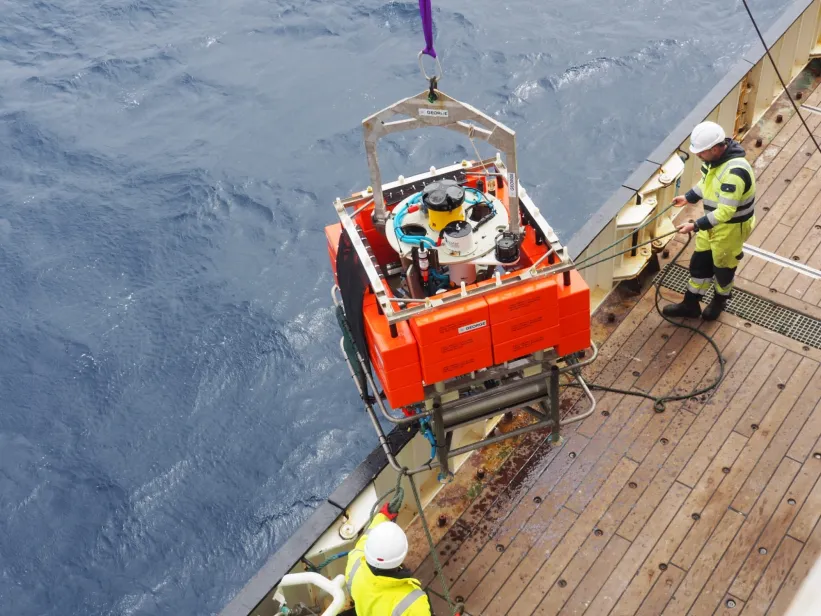
The deep-sea platform EGIM, fitted with state-of-the-art new sensors developed in the ICOS-coordinated GEORGE project, was successfully recovered on 12 May 2026 from nearly five kilometres below the surface at the Porcupine Abyssal Plain Sustained Observatory (PAP-SO) in the Northeast Atlantic. GEORGE is a Horizon Europe-funded project running from 2023 to 2027, bringing together ICOS, EMSO and Euro-Argo to develop the next generation of autonomous technologies for long-term ocean carbon observations.
The Porcupine Abyssal Plain observatory is a long-running open-ocean time series site located about 500 kilometres west of Ireland. Operated by the National Oceanography Centre and the UK Met Office, the site is part of the ICOS Ocean station network and contributes year-round surface ocean and atmospheric carbon dioxide measurements, along with temperature, salinity, oxygen, fluorescence and meteorological data. The site is visited annually for full-depth (4,850 metres) water sampling and data validation.
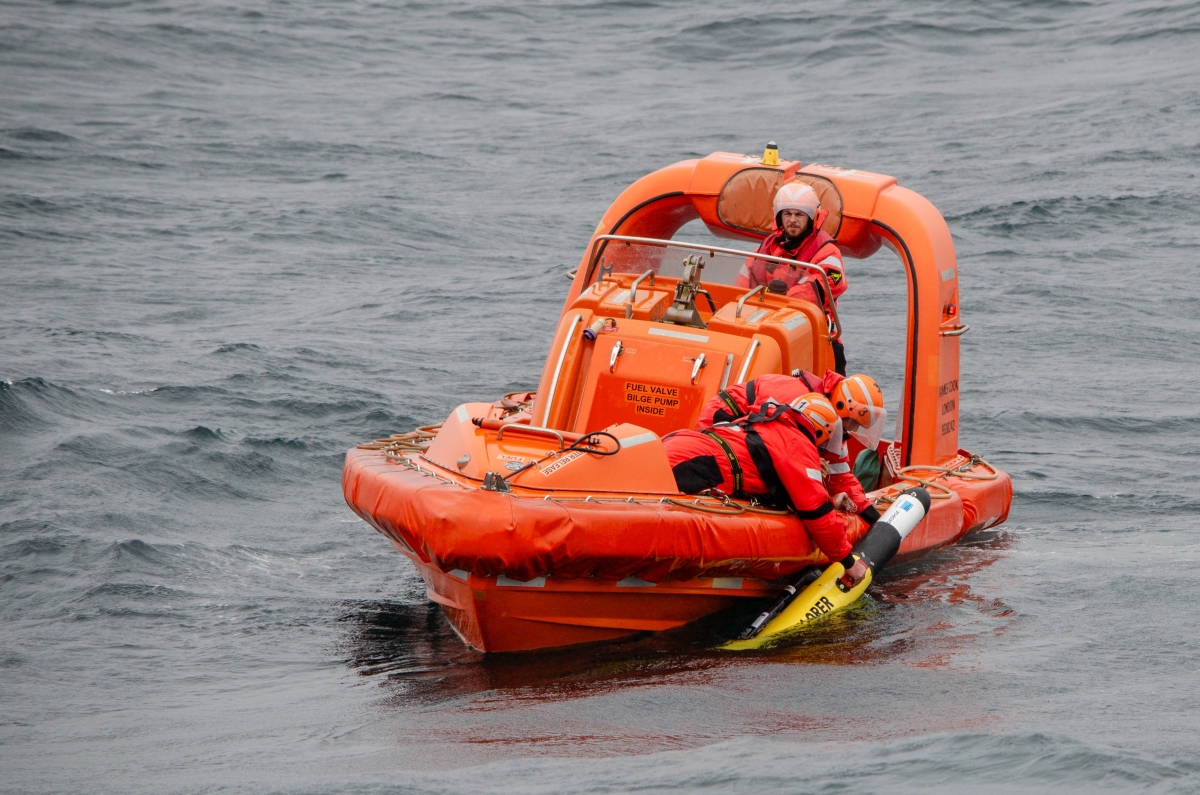
The recovery of the deep-sea platform EGIM marks the end of the GEORGE demonstration missionthat began in June 2025, when the three Research Infrastructures (RIs) involved in GEORGE – ICOS, Euro-Argo and EMSO – carried out multi-platform measurements at the same site at the same time. This allowed scientists to contrast surface measurements with those taken at the seabed, and throughout the almost 5000 m water column using gliders and profiling floats.
The EMSO Generic Instrument Module, or EGIM, was deployed for almost a full year at nearly 5 kilometres deep. On first glance, the sensors onboard the EGIM looked to be in good shape after the recovery.
"There was a significant amount of data recorded but we still need some time to check. Finger crossed!” said Nadine Lanteri, who leads the EMSO French national branch and has been a significant figure in the development of the EGIM.
Next step: data analysis and quality control
The successful recovery is an important step towards high-resolution, autonomous carbon observations across the water column, from the sea surface to the seabed. The next step is to process and quality-control the data, contributing to the development of joint data flows between the RIs and supporting more integrated observations of the ocean carbon system.
Part of this data analysis work will be done this September at Technical Forum III, an workshop for select group of marine RI professionals. The Technical Forum III, organised by ICOS in Helsinki, Finland, will focus primarily the joint data flow between ICOS, EMSO and Euro-Argo.
“The recovery means a great deal for the ocean observing community. It brings us closer to simultaneous measurements from the sea surface to the seabed, and supports collaboration between three leading marine Research Infrastructures as we begin working with joint data. I want to thank the skilled crew and staff onboard the research vessel, the scientists in GEORGE, as well as all those providing their valuable input in planning and carrying out GEORGE part of the expedition”, says GEORGE coordinator, Janne-Markus Rintala from ICOS.