ICOS Belgium
Belgium hosts one of the densest ICOS observation networks in Europe, spanning ecosystems, oceans and the atmosphere. Several stations are located in unique environments and provide long-term, high-quality data essential for understanding the greenhouse gas (GHG) balance and fluxes. Belgium also plays a coordinating role in the ecosystem network as co-host of the ICOS Ecosystem Thematic Centre (ETC) and is particularly responsible for the collection and processing of ancillary data, one of the three pillars of the ETC.
The ecosystem network includes eight stations. Two mixed forest sites, Brasschaat and Vielsalm, are among the longest-running forest flux stations worldwide, with more than 20 years of continuous measurements. The Maasmechelen site in Hoge Kempen National Park is Europe’s first heathland station monitoring GHG exchange.
Four cropland sites strengthen the network’s land-use coverage. Dorinne is one of the few ICOS grassland stations in Europe, Lonzée provides one of the longest-running cropland GHG datasets. The two Westmalle sites are unique in directly comparing traditional and carbon farming practices, offering rare insights into how agricultural management influences carbon emissions and uptake.
Beyond Europe, the Yangambi station in the Yangambi Biosphere Reserve is the only flux tower in the Congo Basin measuring GHG exchange, delivering crucial data from a globally important yet under-sampled tropical region.
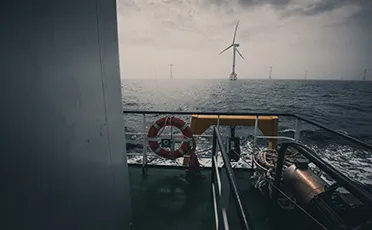
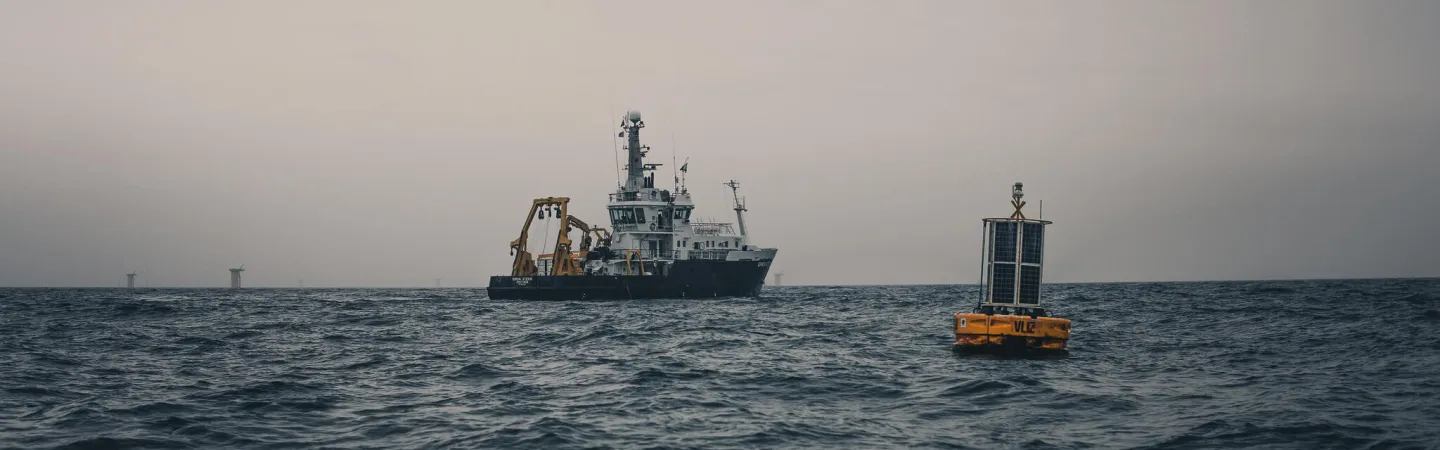
The ocean network combines fixed and mobile observations in the North Sea. The Thornton Buoy near the C-Power wind farm provides continuous measurements estimating temporal variability of ocean carbon concentrations, while the research vessel RV Simon Stevin ensures spatial coverage across the Southern Bight of the North Sea and the eastern English Channel.
The atmospheric network includes a station on Réunion Island, operated in collaboration with France, and the Heverlee station in central Belgium. The Heverlee site, the newest addition to the Belgian network, with further development planned in 2026, will support national GHG modelling.
The ICOS Belgium network involves two Walloon, three Flemish and two Federal institutes: University of Antwerp (coordination), Flanders Marine Institute, Ghent University, University of Liege, UCLouvain, Royal Belgian Institute for Space Aeronomy, and Royal Belgian Institute of Natural Sciences. Flemish research is funded by the Flanders Research Foundation (FWO), Walloon patterns are financed by the Service Public de Wallonie, and BIRA funds the national ICOS institutes.
Belgium Station Network
ICOS Belgium stations in the map. Hover over the stations and the ship lines for more details.
Contact ICOS Belgium
ICOS Belgium Focal Point
Ivan Janssens, Professor
Plants and Ecosystems, PLECO
University of Antwerp, Belgium
contact-belgium (at) lists.icos-ri.eu